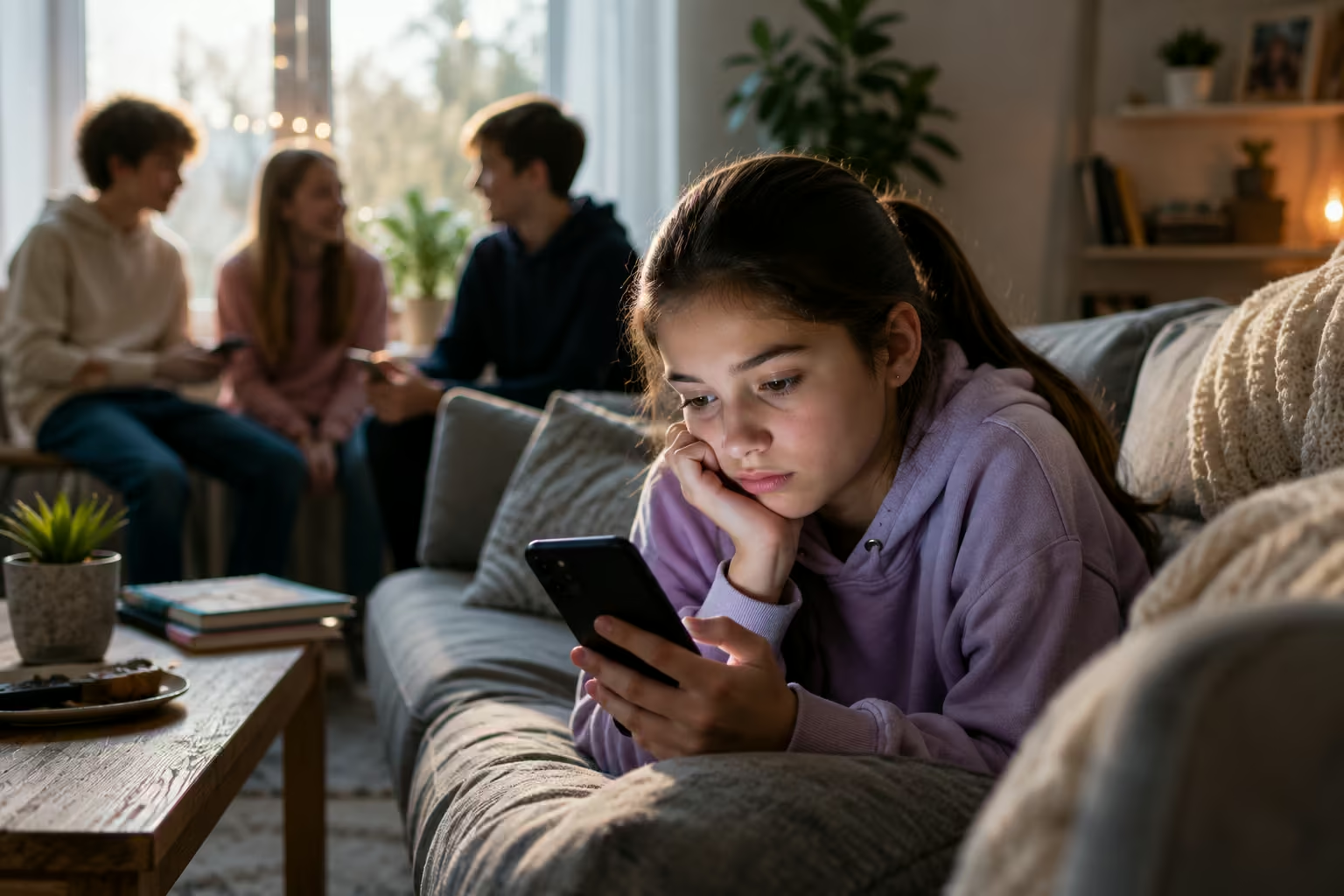

For many families, summer is a welcome break from the routines of the school year. Mornings become a little slower, schedules become more flexible, and children suddenly have hours of free time to fill.
Along with these changes often comes another reality: more screen time.
Whether it’s watching videos, gaming with friends, scrolling social media, or texting, screens often become a larger part of daily life during the summer months.
For many parents, this can lead to questions like, “How much is too much?” or “How can I encourage my child to spend more time offline without constant arguments?”
The good news is that helping children find a healthy balance doesn’t have to mean eliminating screens altogether. Instead, summer can be an opportunity to create routines and experiences that naturally encourage children to spend more time engaging with the world around them.
It is important to remember that, according to the Child Mind Institute, increased screen time during summer is not unusual. Without school, extracurricular activities, and homework providing structure, children naturally have more unstructured time.
Rather than striving for a completely screen-free summer, consider focusing on balance.
Technology has many positive uses, from staying connected with friends to exploring hobbies and learning new skills. The goal is not to remove screens entirely, but to ensure they are one part of a well-rounded summer.
Children are more likely to choose activities that are accessible and engaging. Instead of asking, “What should we do today?” try creating opportunities that invite play without requiring extensive planning.
Some simple ideas include:
- Keeping sports equipment, sidewalk chalk, or bubbles easily accessible.
- Visiting local parks, splash pads, or libraries.
- Setting up craft supplies for creative projects.
- Encouraging bike rides, neighbourhood walks, or backyard games.
- Planning family activities such as baking, gardening, or picnics.
When interesting alternatives are available, children are often more willing to step away from their devices.
Although it might sound counterintuitive, boredom can also be a great strategy. As parents, it can be tempting to fill every quiet moment with entertainment. However, developmental psychologists say boredom is not something to fear.
When children have the chance to be bored, they often begin creating their own activities. They build forts, invent games, read books, draw pictures, explore outdoors, or simply use their imagination.
These moments help children develop creativity, problem-solving skills, independence, and confidence. While it may take time for children to adjust, giving them space to entertain themselves can be incredibly valuable.
Routines are also very helpful to implement. Children often respond better to consistent routines than to changing rules.
Rather than negotiating screen time throughout the day, consider creating predictable expectations. For example:
- Screens after outdoor play.
- Devices away during meals.
- No phones or tablets before bedtime.
- Family screen-free time in the evenings.
When expectations are clear and consistent, there is often less conflict and fewer power struggles.
Another helpful strategy can be prioritizing connection. One of the greatest benefits of summer is having more opportunities to connect with others.
Encourage children to spend time with friends, cousins, grandparents, or neighbours whenever possible. Family walks, game nights, trips to the pool, or simply talking over dinner can provide meaningful moments of connection that screens cannot replace. Children are often less interested in their devices when they are engaged in enjoyable experiences with the people around them.
According to the American Academy of Pediatrics, arguably one of the most effective strategies to implement is modelling a balance. Children learn as much from what we do as from what we say.
If adults are frequently checking emails, scrolling social media, or reaching for their phones during family time, children notice. Modelling healthy technology habits (such as putting phones away during meals or choosing outdoor activities together) can reinforce the behaviours we hope to encourage.
Remember; summer does not have to be completely screen-free to be meaningful. Technology is an important part of modern life and can certainly have a place in children’s routines.
However, summer also offers something unique: time to explore, create, connect, and simply be a child. Rather than focusing only on reducing screen time, consider what you would like to add to your child’s summer. More laughter with friends. More evenings spent outside. More family traditions. More opportunities for independence and creativity.
When children have meaningful experiences to look forward to, screens naturally become just one part of a balanced summer; not the centre of it.
References and Further Reading
American Academy of Pediatrics. (n.d.). Family media plan.
https://www.healthychildren.org/MediaUsePlan
Child Mind Institute. (2026). Screen time and summer.
https://childmind.org/article/screen-time-and-summer/
Haidt, J. (2024). The anxious generation: How the great rewiring of childhood is causing an epidemic of mental illness. Penguin Press.
The Guardian. (2026, July 15). Kids, summer, smartphones, mental health, parents and independence.
https://www.theguardian.com/commentisfree/2026/jul/15/kids-summer-smartphones-mental-health-parents-independence